Chiang Rai’s three seasons at a glance
| Season | Months | What to expect |
|---|---|---|
| Cool and dry | November–February | Clear skies, warm afternoons, chilly early mornings. Peak season, so busier at the big temples. |
| Hot | March–April | Afternoons around 33–34°C. Smoke from crop burning can leave the hills hazy from February to April. |
| Rainy | May–October | Green countryside, fewer visitors. August is the wettest month; showers usually come in bursts rather than all day. |
Month by month
| Month | Average high / low | Rain | Worth knowing |
|---|---|---|---|
| January | 27°C / 12°C | Very little | Coldest mornings of the year. Flower festival season in the city. |
| February | 31°C / 13°C | Driest month | Warming up; haze can start to build late in the month. |
| March | 33°C / 16°C | Little | Hot and often hazy. Plan temples for the morning. |
| April | 34°C / 20°C | First storms | Hottest month. Songkran, the Thai New Year water festival, 13–15 April. |
| May | 33°C / 22°C | Rains begin | Air clears once the rain arrives. |
| June–July | 31°C / 23°C | Regular rain | Lush rice fields and tea hills; quieter sites. |
| August | 30°C / 22°C | Wettest | Pack a light rain jacket; mornings are often the driest part of the day. |
| September | 30°C / 22°C | Wet | Still green, rain easing towards the end of the month. |
| October | 29°C / 20°C | Easing | A good shoulder month — fresh, green and not yet busy. |
| November | 28°C / 17°C | Little | Cool season starts. Loy Krathong falls in late November (24–25 November in 2026). |
| December | 26°C / 12°C | Very little | Cool, clear and busy over Christmas and New Year. |
Averages are long-term climate figures; any single year can be warmer, cooler, wetter or drier.
Cool season: November to February
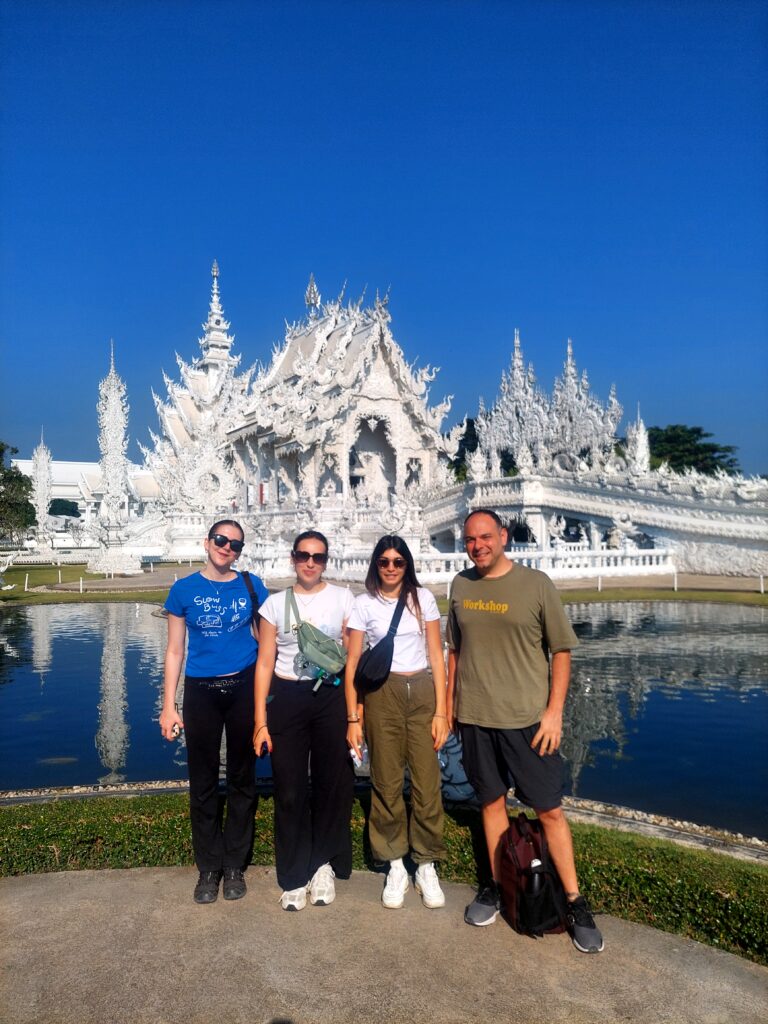
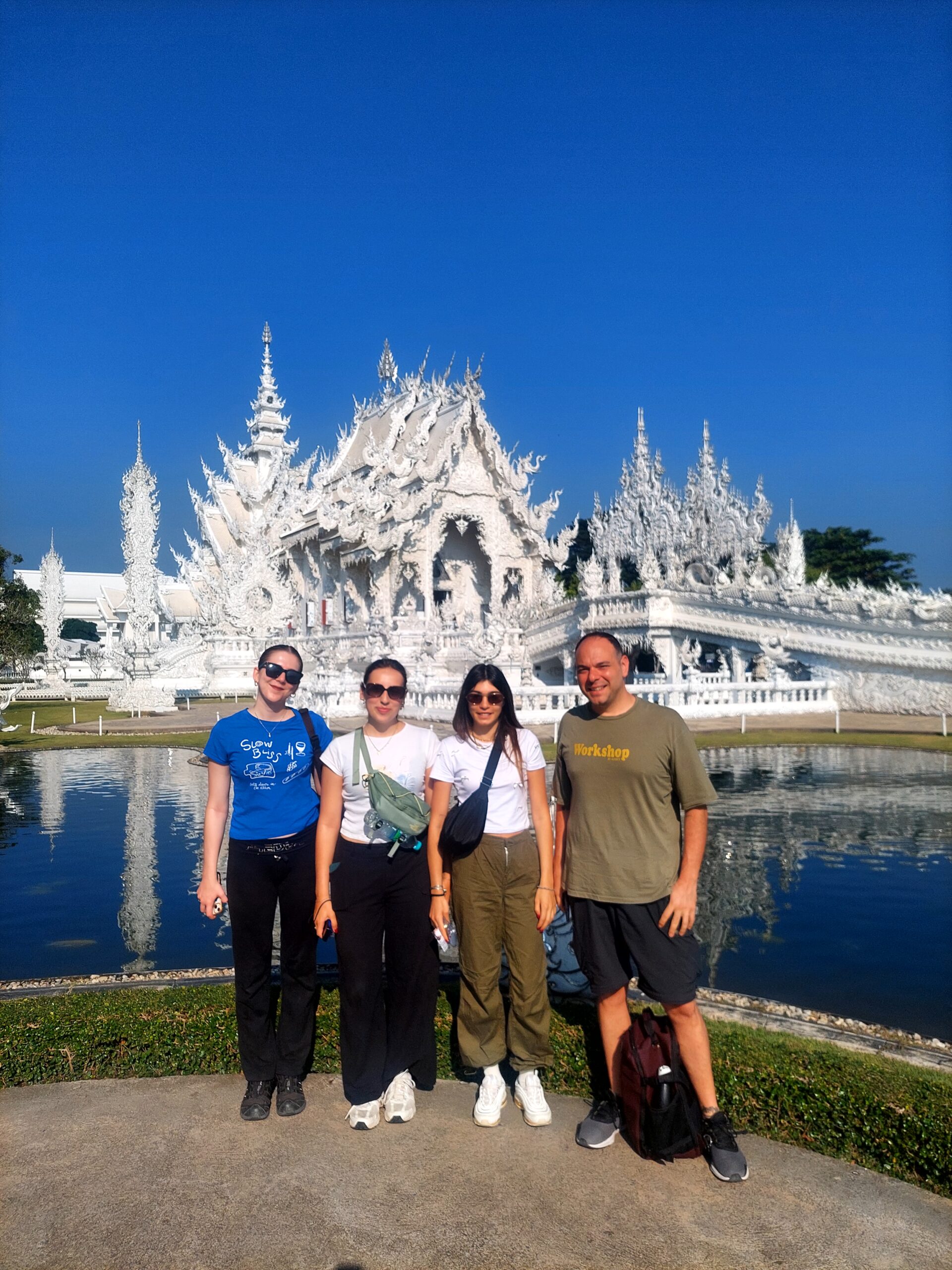
This is when most people come, and for good reason. The skies are clear, the White Temple glitters against the blue, and walking around in the middle of the day is comfortable. The catch is the mornings: in December and January it can be around 12°C at pickup time, and colder up in the hills. Bring a light jacket or fleece — you will take it off by lunchtime.
It is also the busiest season. The White Temple is quieter first thing in the morning, which is why our tour goes there first. If you are coming over Christmas, New Year or Chinese New Year, book hotels and tours early.
Hot season: March and April
Afternoons get properly hot, and February to April is the northern burning season, when smoke from farm fires can hang over the hills for days at a time. The temples are still worth seeing, but distant views — across the Mekong at the Golden Triangle, or over the tea plantations — can be hazy. If you have breathing problems, check the air quality before you travel and consider a mask.
April has one big plus: Songkran. From 13 to 15 April the whole country celebrates the Thai New Year with water fights in the streets. Expect to get soaked in town — keep your phone in a waterproof pouch.
Rainy season: May to October
Do not let the word “rainy” put you off. The rain usually comes as heavy showers rather than grey days of drizzle, the haze is gone, and the rice fields and tea hills are at their greenest. There are fewer visitors and hotel prices are often lower. We run the 7 Highlights tour right through the rainy season — July and August are some of our busiest months.
Bring a light rain jacket or umbrella, shoes you do not mind getting wet, and allow a little flexibility if you are planning outdoor trips such as trekking.
Festivals worth planning around
- Loy Krathong (late November): people float candle-lit baskets on rivers and ponds to give thanks to the water. Chiang Rai’s celebrations are smaller and more local than the famous Yi Peng lantern events in Chiang Mai. In 2026 it falls on 24–25 November.
- Chiang Rai Flower Festival (late December into February): a large flower show at the riverside park in the city. Dates are announced each year, so check closer to the time.
- Songkran (13–15 April): Thai New Year, celebrated with water. Some Chiang Rai events run for a few extra days.
So when should you go?
- Best weather: November to early February.
- Fewer crowds and lower prices: May to October, with October a particularly good shoulder month.
- Best to avoid if you want clear views: March and April, and late February.
Whatever the month, the main sights — the White Temple, the Blue Temple and the Black House — are open, and a day tour is the easiest way to see them without worrying about the weather or transport. Our Chiang Rai 7 Highlights Join Tour picks you up from your hotel at 08:00–08:30 and brings you back at 18:00–19:00, with a buffet lunch and an English-speaking guide. Entrance fees are paid at each site where you choose to go in — about ฿630 if you visit them all; see our entrance fees guide.
If you would rather set your own pace — an early start in the cool season, or a flexible day in the rains — our private driver costs ฿3,000 for a car (up to three) or ฿5,000 for a van (up to nine), 08:00–18:00. Planning the White Temple in detail? Read our White Temple guide.
Frequently asked questions
What is the best month to visit Chiang Rai?
December and January for cool, clear weather; November and early February are almost as good and a little warmer in the mornings.
Is Chiang Rai worth visiting in the rainy season?
Yes. The countryside is green, the air is clear and the sights are quieter. Most rain comes in short, heavy showers, so a day of sightseeing usually goes ahead.
How cold does Chiang Rai get?
In December and January early mornings average around 12°C in the city, and it can be colder in the mountains. Afternoons are still warm.
When is the burning season in Chiang Rai?
Roughly February to April, when smoke from agricultural fires can make the air hazy. It varies from year to year.
About us
JTTT Travel Thailand is a local tour operator in Chiang Rai, registered with the Thai Department of Tourism under TAT Licence 21/01119. Our guides are out on the road in every season, so the advice on this page comes from our own days in the sun, the rain and the haze. If something has changed, tell us at jttt.travel@gmail.com and we will check and update it.
— JTTT-Travel Thailand